Impossible, or just expensive?
By Michael Mancuso · October 11, 2026 · Originally published on LinkedIn
Mathematics has a curious relationship with time.
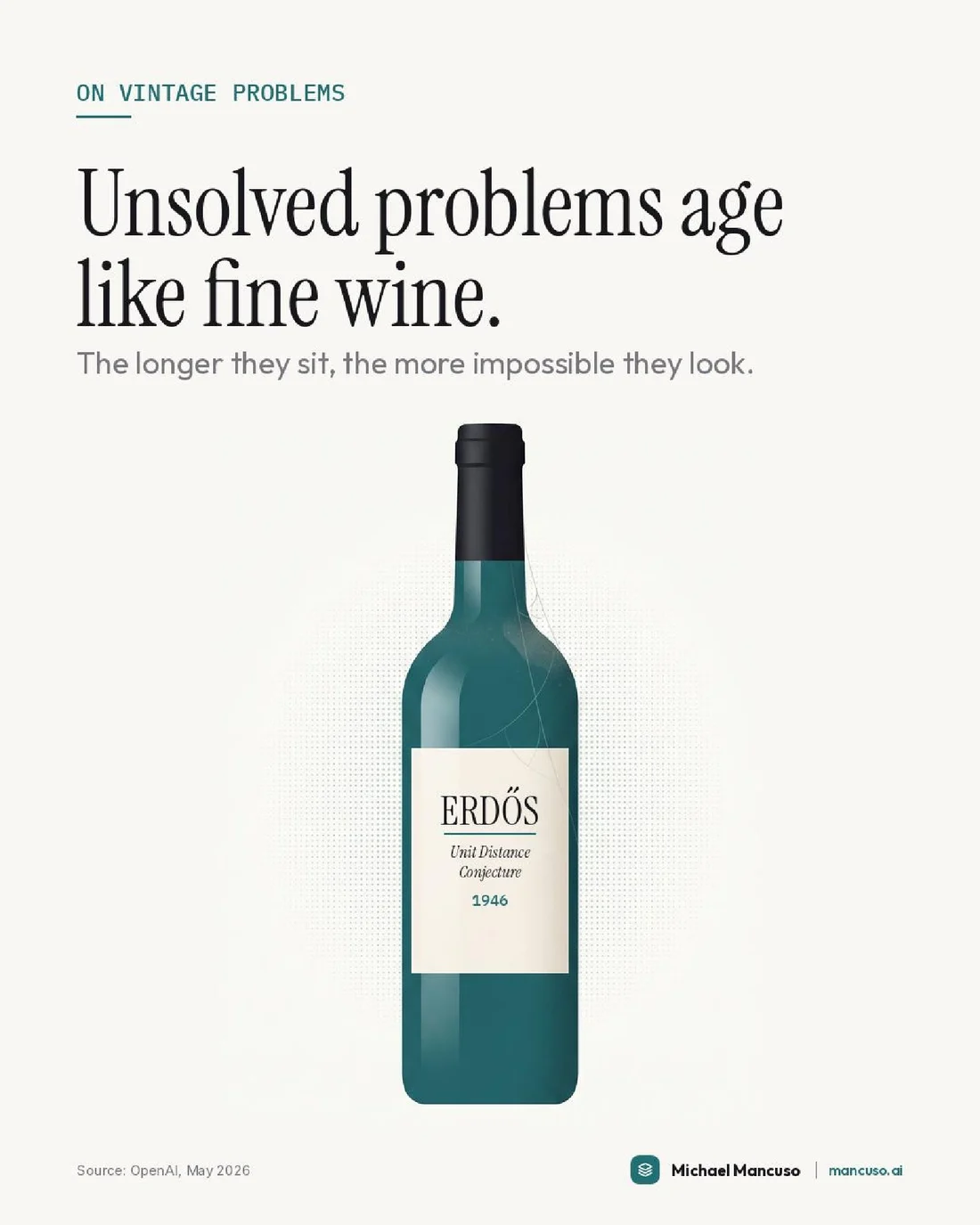
A famous unsolved problem is a bit like a vintage wine. The longer it sits, the more prestigious it becomes, and the more people assume it's undrinkable.
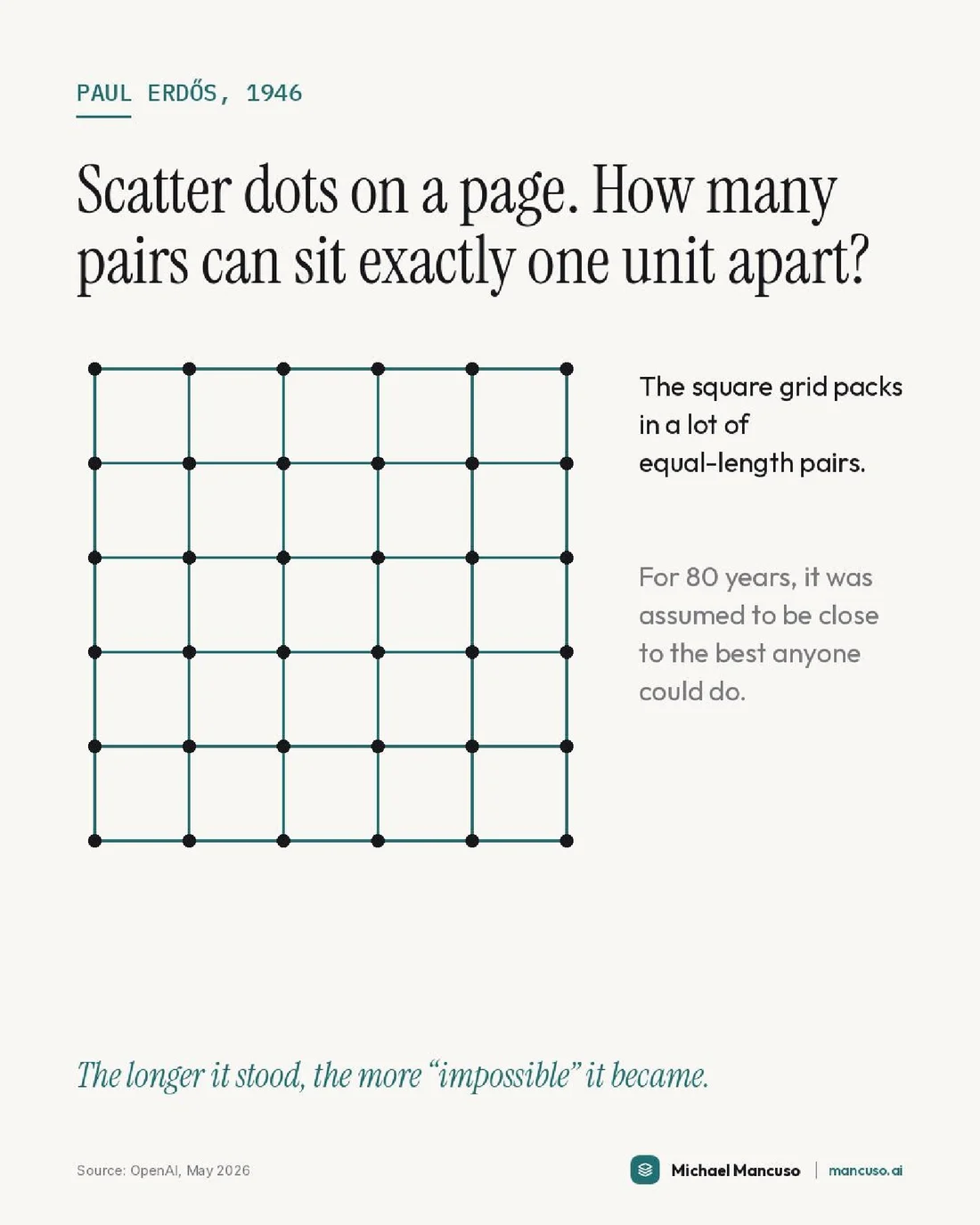
Erdős's unit distance problem had been aging since 1946. Generations of brilliant people looked at it and concluded, quite reasonably, that the obvious answer was the right one.
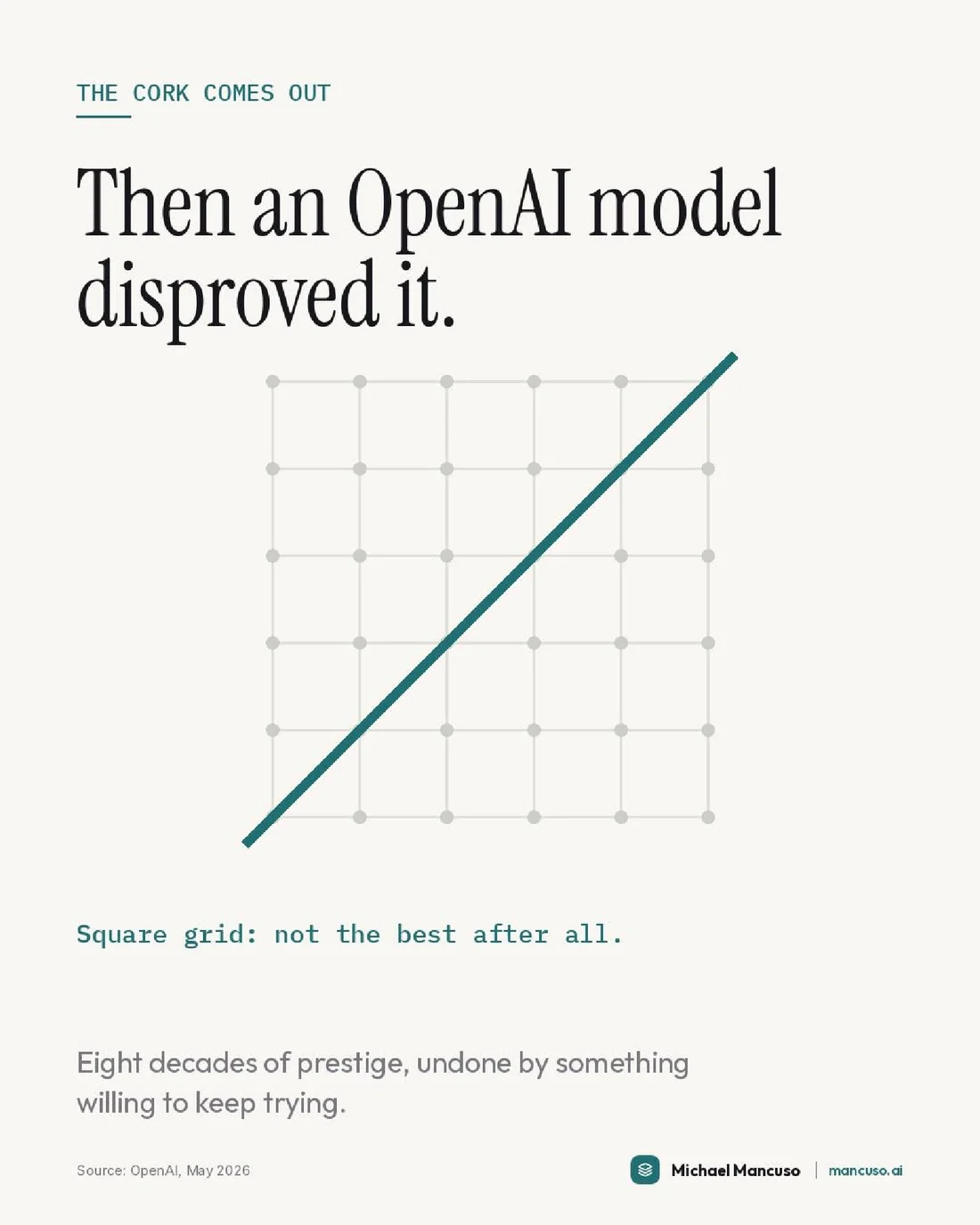
Then an OpenAI model was asked, rather bluntly, whether Erdős was right. He wasn't.
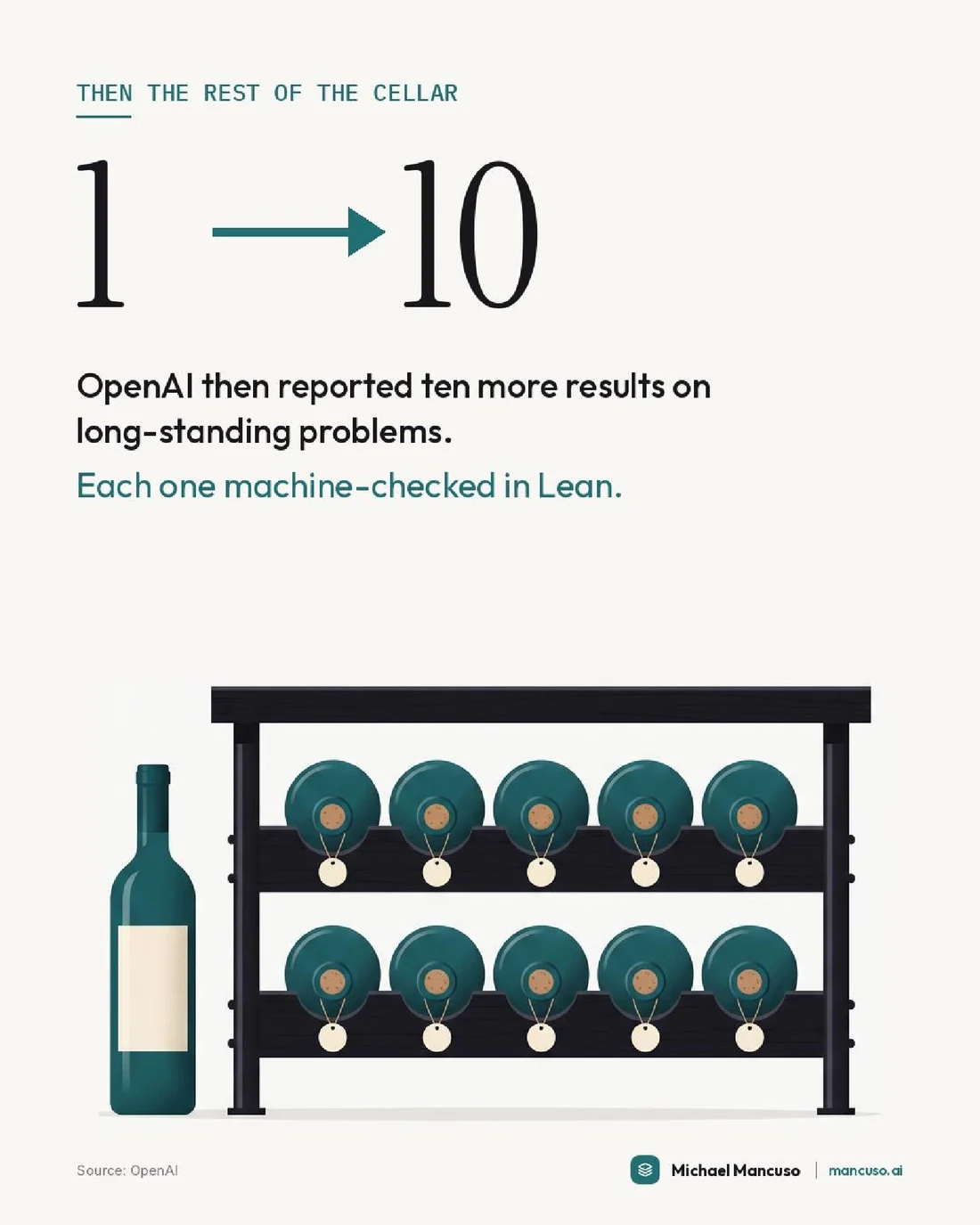
That alone would have been a good year. But OpenAI then reported ten more results on long-standing problems, each one checked by a machine that has no ego and no career to protect.
Here's the interesting bit. We assumed these problems were unsolved because they were hard. Some may simply have been unsolved because nobody could afford to spend a decade being wrong about them.
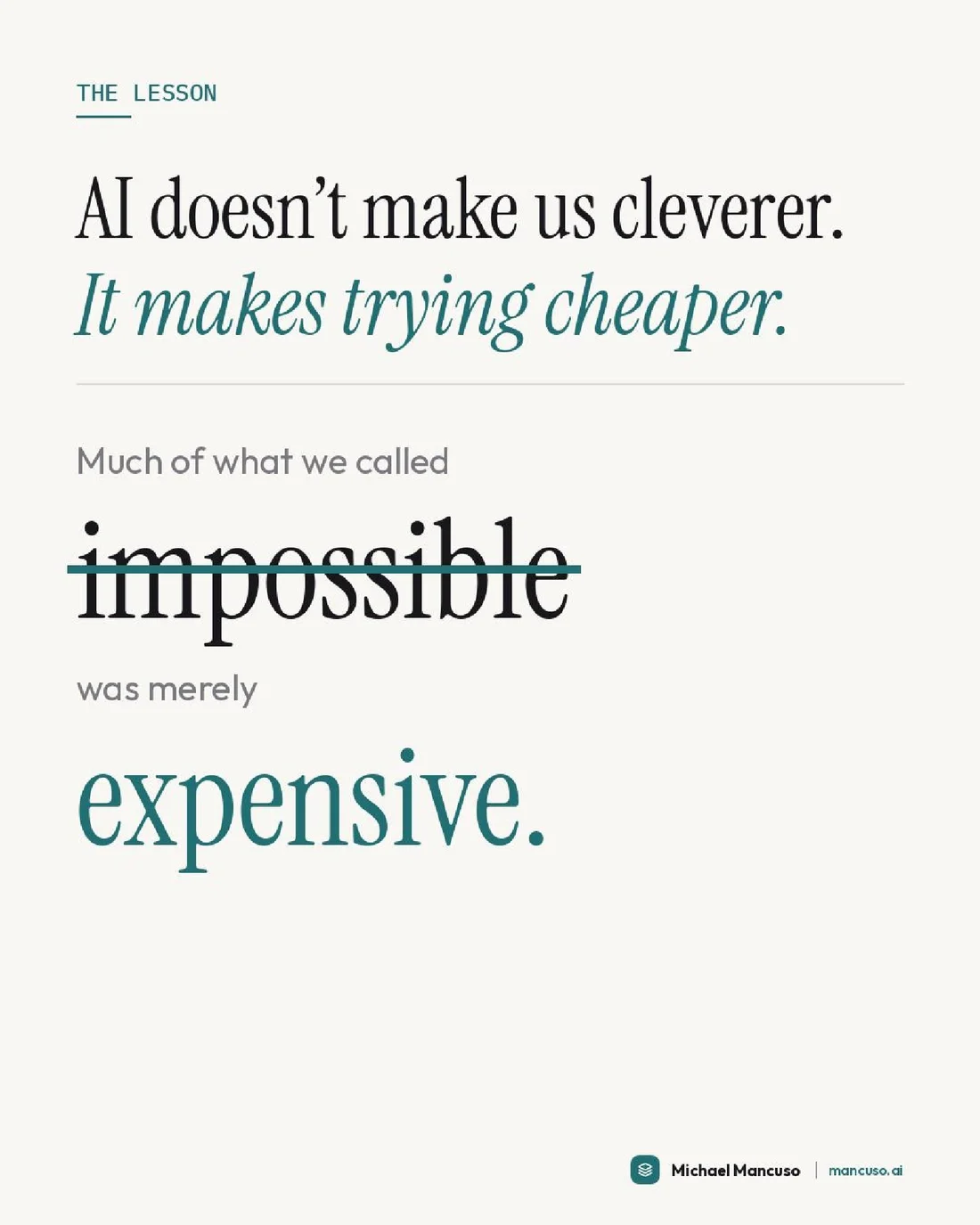
AI doesn't make us cleverer. It makes trying cheaper. And when trying is cheap, a great deal of what we called "impossible" turns out to have been merely "expensive."
The question for the rest of us is how many of our own vintage problems are really just untried.
Read slide text
Slide 1
On vintage problems.
Unsolved problems age like fine wine. The longer they sit, the more impossible they look.
Slide 2
Paul Erdős, 1946.
Scatter dots on a page. How many pairs can sit exactly one unit apart?
The square grid packs in a lot of equal-length pairs. For 80 years, it was assumed to be close to the best anyone could do.
The longer it stood, the more “impossible” it became.
Slide 3
The cork comes out.
Then an OpenAI model disproved it. Square grid: not the best after all.
Eight decades of prestige, undone by something willing to keep trying.
Slide 4
Then the rest of the cellar.
1 → 10. OpenAI then reported ten more results on long-standing problems. Each one machine-checked in Lean.
Slide 5
The lesson.
AI doesn’t make us cleverer. It makes trying cheaper.
Much of what we called impossible was merely expensive.
Sources cited in the slides: OpenAI, May 2026.