Free things never get a job description.
By Michael Mancuso · October 27, 2026 · Originally published on LinkedIn
Free things never get a job description.
To the team using it, AI feels free. So nobody writes down what it's supposed to produce.
Accenture surveyed 750 executives at $1B+ companies in July.
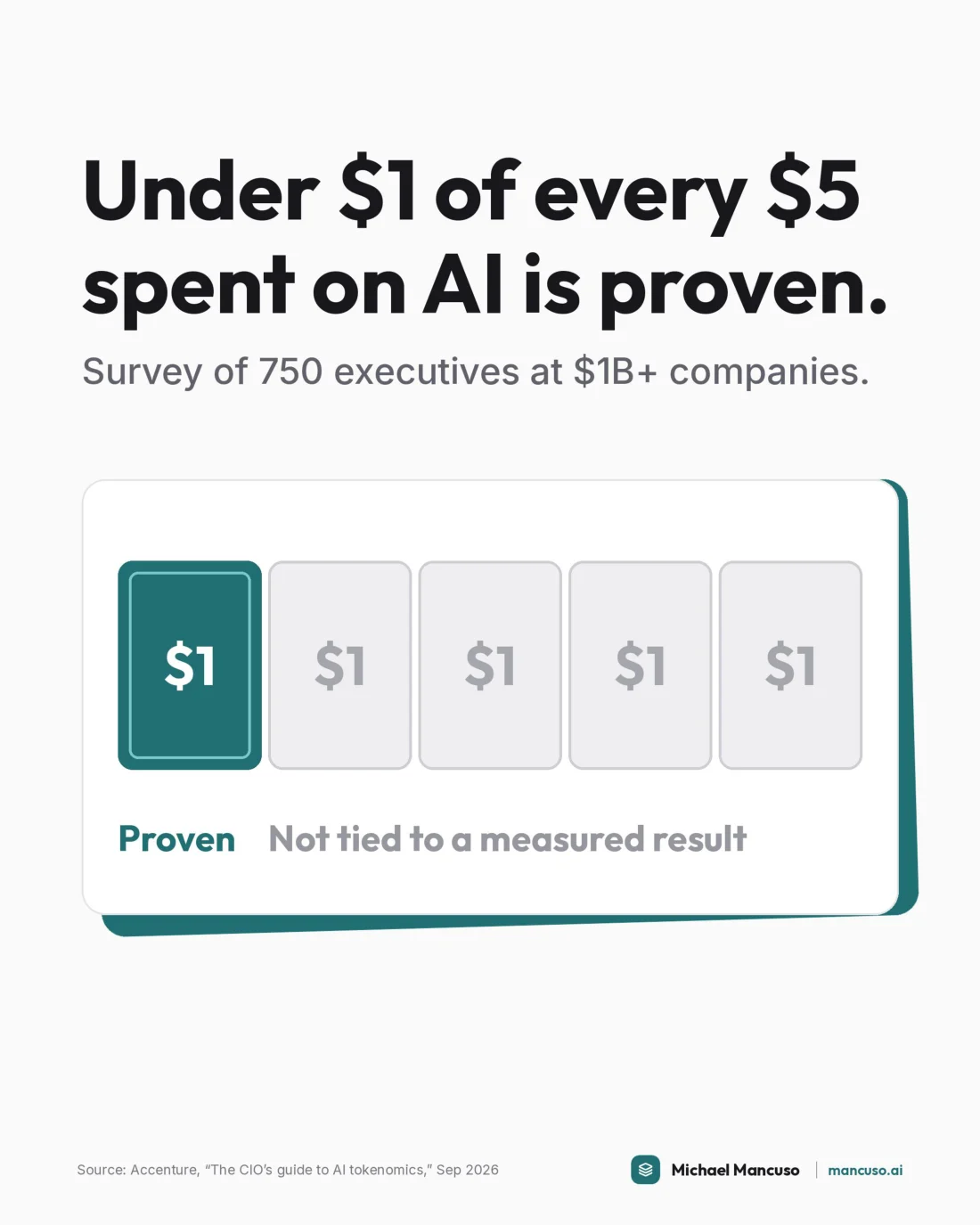
Under $1 of every $5 they spend on AI traces to a measured financial result.
The fix needs no new budget and no finance team.
Before a team or an agent gets more AI, write two lines:
Owner: ___
Expected result: ___ by ___
That's how I design AI work. A name and a number, before the work starts.
Accenture puts it plainly: it "needs to exist before the spend, not while trying to justify it afterward."
In an AI-native organization, nothing gets AI until someone owns what it's for.
#AI #Leadership
Read slide text
Slide 1
Under $1 of every $5 spent on AI is proven.
Survey of 750 executives at $1B+ companies. Chart: proven versus not tied to a measured result.
Slide 2
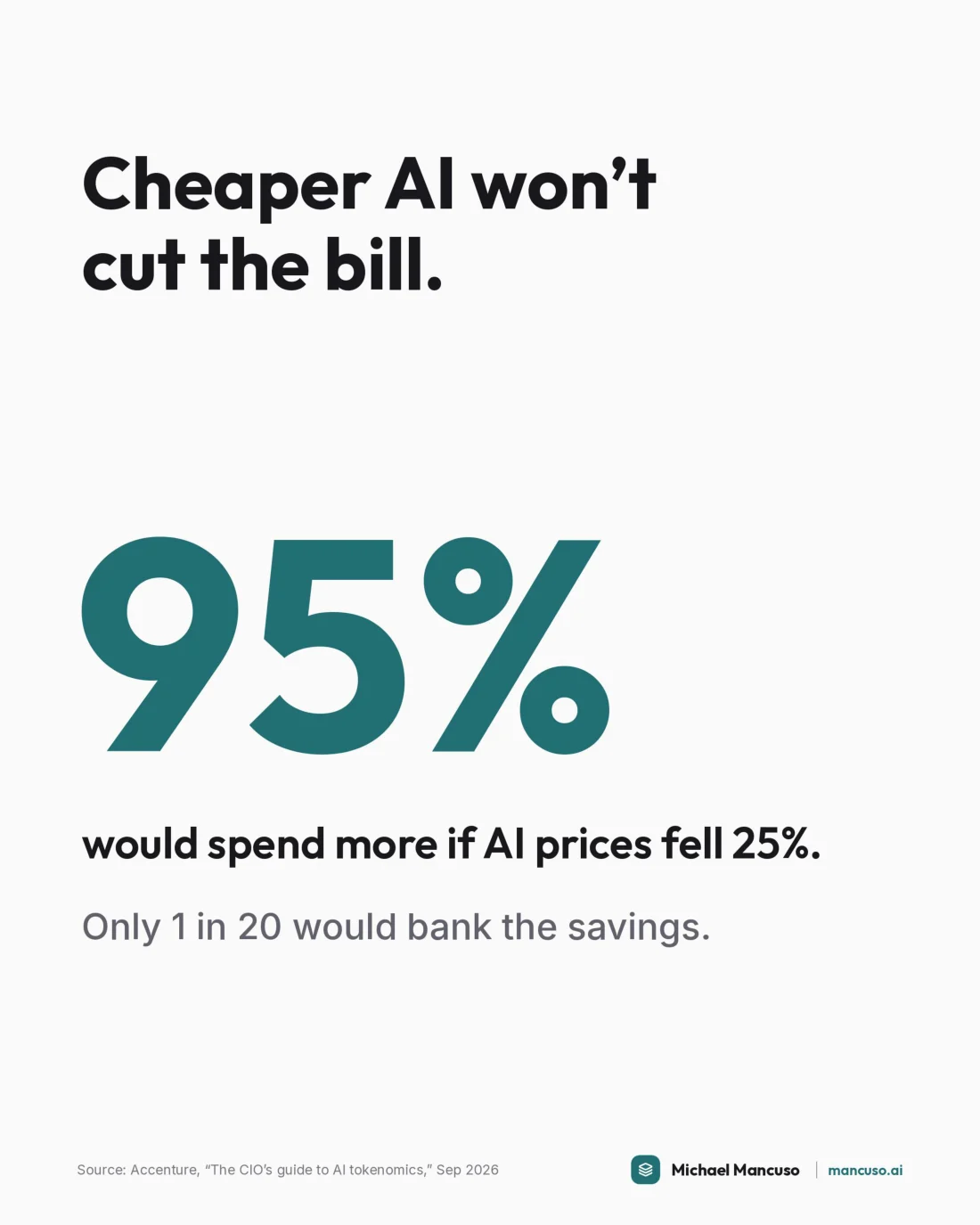
Cheaper AI won’t cut the bill.
95% would spend more if AI prices fell 25%. Only 1 in 20 would bank the savings.
Slide 3
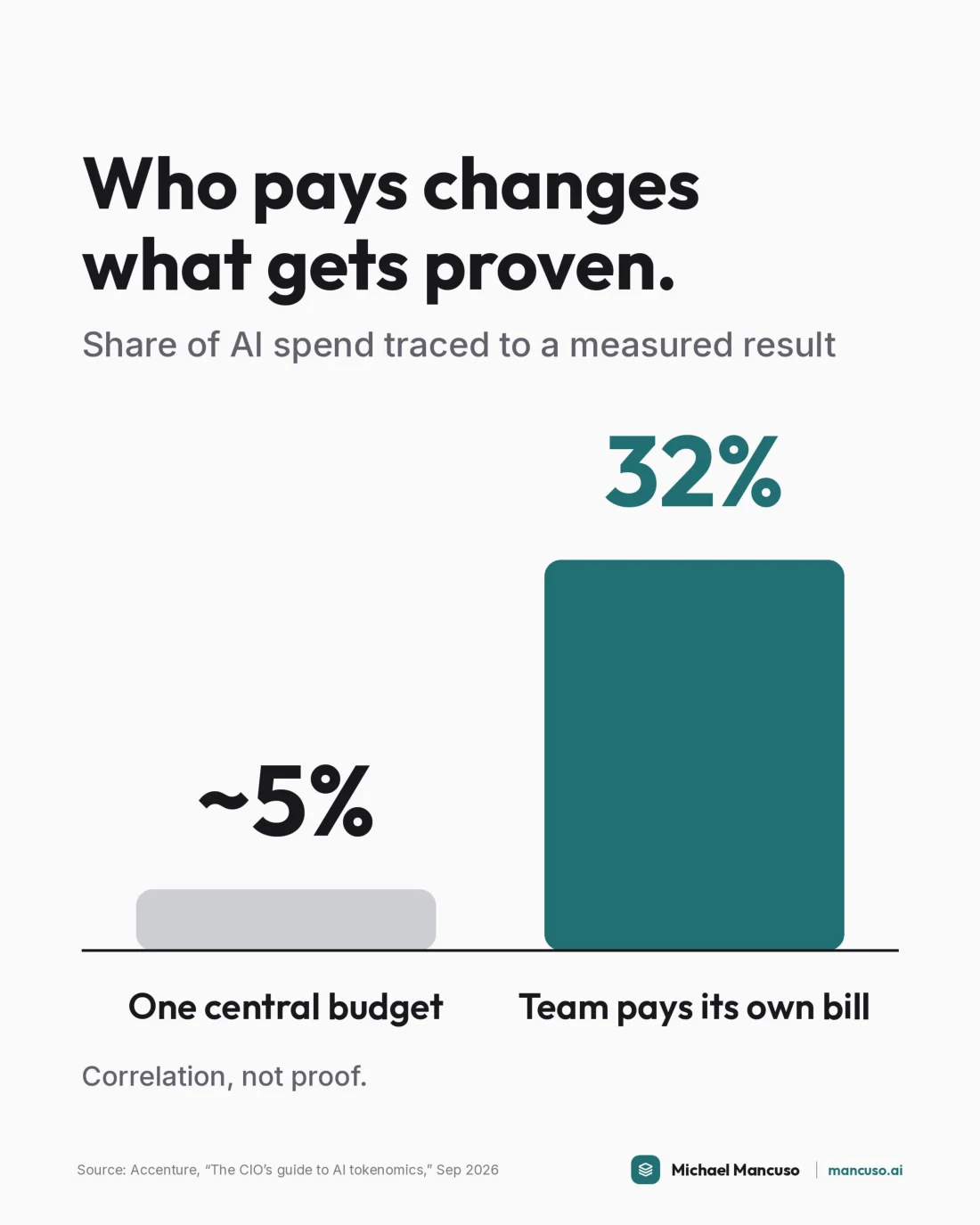
Who pays changes what gets proven.
Share of AI spend traced to a measured result: one central budget, ~5%; team pays its own bill, 32%.
Correlation, not proof.
Slide 4
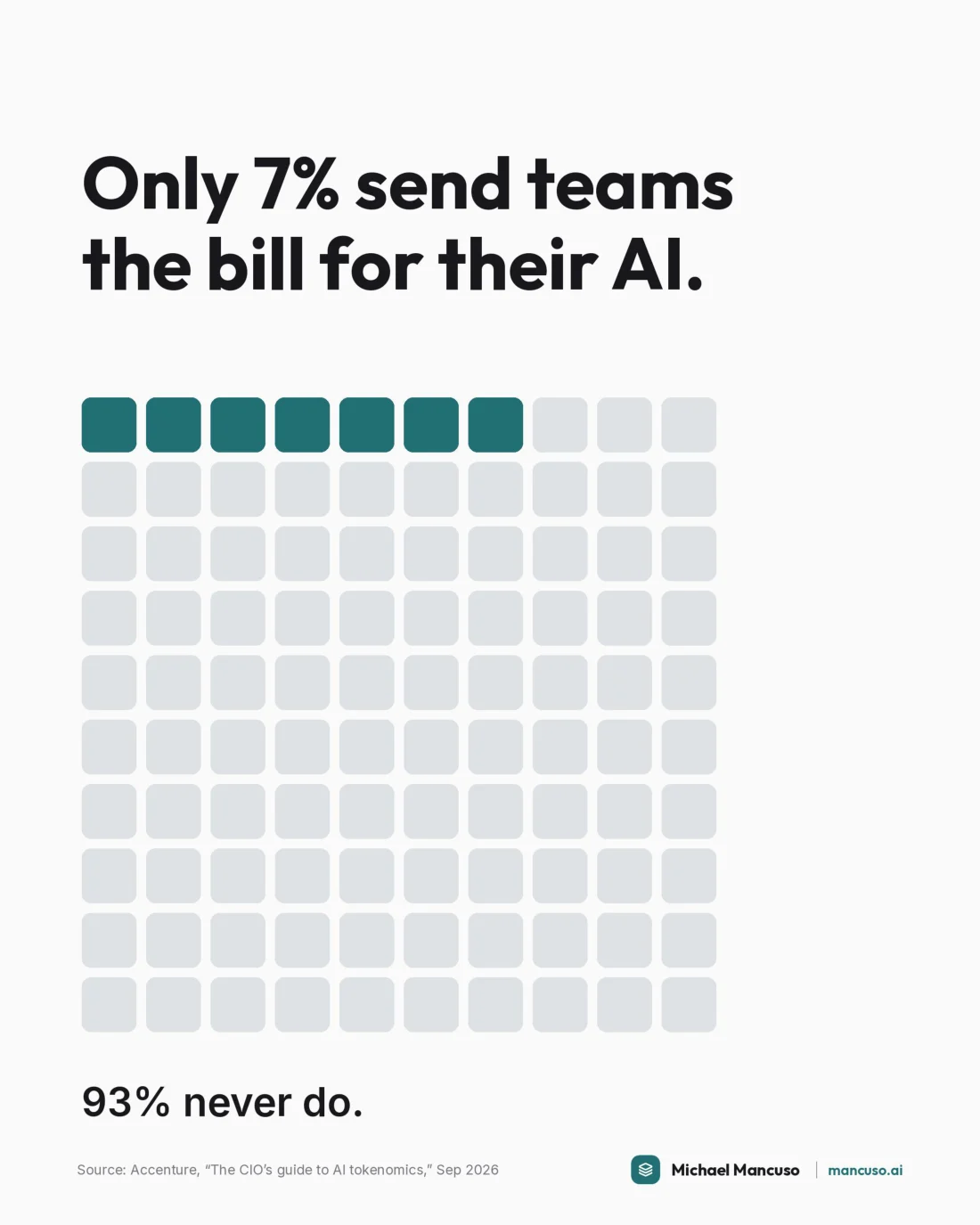
Only 7% send teams the bill for their AI.
93% never do.
Slide 5
A free tool never has to prove what it earns.
Michael Mancuso — I design AI-native organizations.
Sources cited in the slides: Accenture, “The CIO’s guide to AI tokenomics,” September 2026.